
TECHNICAL INSIGHTS · October 30, 2026
PCD Tooling for Sale: An RFQ Checklist for CNC Buyers
Compare PCD tooling for aluminum, copper, graphite and composites by geometry, edge preparation, cost per part, inspection and supplier support.
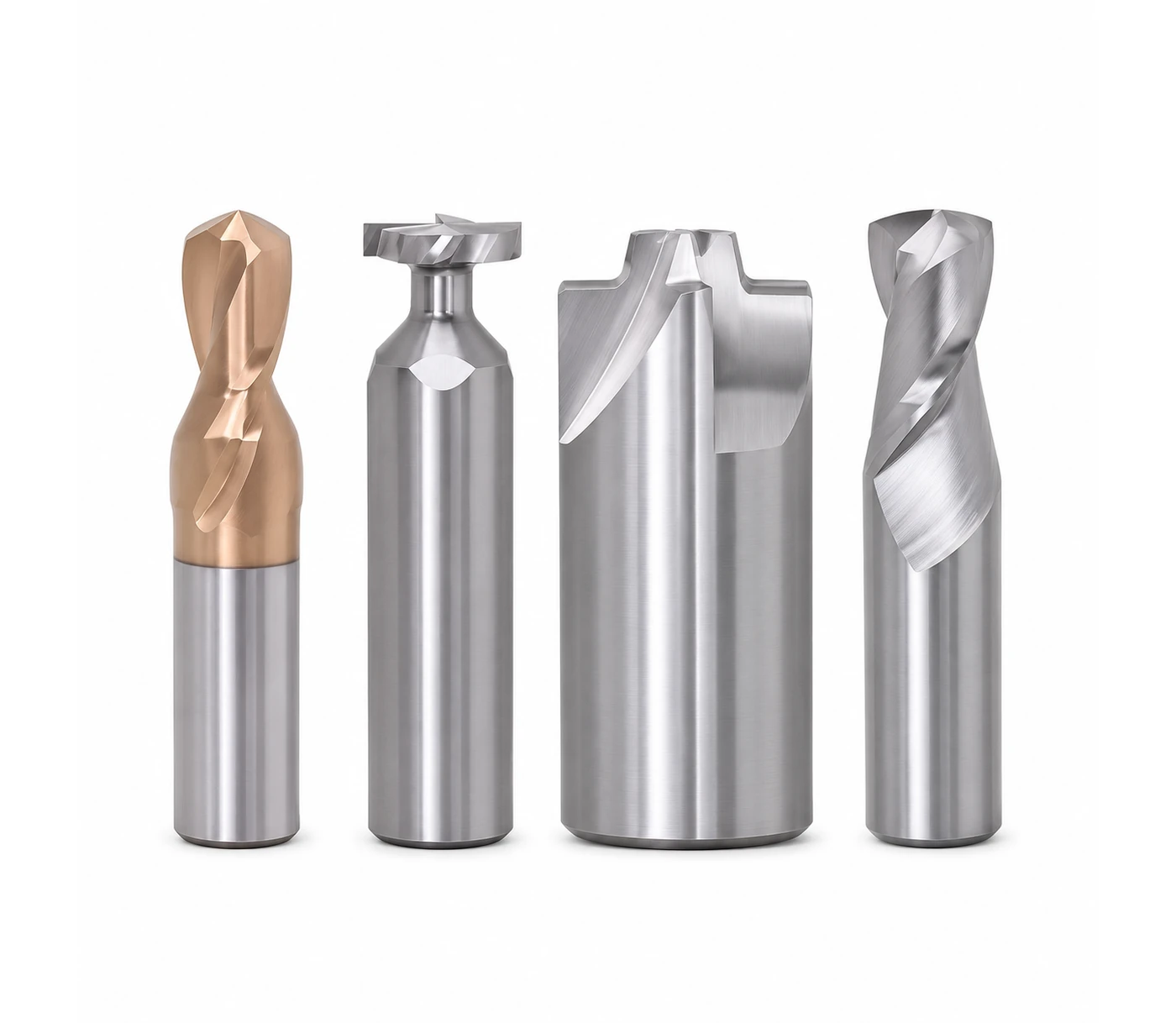
Searching for “PCD tooling for sale” usually means the buyer has moved beyond a generic catalog comparison. The real question is whether the tool will hold surface finish, hole quality and cycle time on the production material. PCD tooling can deliver long wear life on aluminum, copper, graphite and composite parts, but only when the diamond grade, edge geometry, body design and application are matched correctly.
This RFQ checklist helps CNC engineers, procurement teams and tool distributors compare PCD suppliers on the factors that affect cost per part—not only the initial tool price.
Start with the material and the failure mode
Describe the material by grade and condition. High-silicon aluminum behaves differently from a soft wrought alloy. Copper may smear or generate built-up edge. Graphite creates abrasive dust, while CFRP and GFRP can delaminate or pull fibers at entry and exit. Include the current failure mode: burrs, poor gloss, oversized holes, edge chipping, short tool life, unstable chip evacuation or an unacceptable cycle time.
A good PCD supplier uses this information to choose the right tool family. A finishing end mill, a PCD drill, a form cutter and an insert may all be called “PCD tooling,” but they solve different process problems.
Compare the geometry, not just the material name
PCD drills
For composite stacks and abrasive aluminum, the point geometry controls entry quality, thrust and chip evacuation. Ask how the tool will manage the transition between layers, whether a step or pilot is required, and how the edge is prepared. For thin laminates, the exit condition may be more important than the nominal drill speed.
PCD end mills and high-gloss cutters
For aluminum and copper, the rake, clearance, number of flutes and edge preparation influence finish and cutting force. A polished flute can help with chip flow, while a balanced body and accurate runout are essential for a consistent mirror surface. If the part has a special profile, request a drawing review instead of adapting a general-purpose cutter.
PCD form tools and inserts
Form tools are useful when several features must be produced in one pass or when the profile must be repeatable across a batch. Inserts can reduce replacement cost when the holder is standardized. Ask for the corner radius, usable edge length, balance requirements and whether replacement inserts will remain compatible with the original holder.
Five questions to ask a PCD supplier
- What is the recommended material range? Request a clear explanation for high-silicon aluminum, copper, graphite, CFRP or GFRP rather than a broad “non-ferrous” label.
- How is runout inspected? Confirm the datum, measurement location and reporting method. Runout at the cutting edge may matter more than shank runout for a finishing operation.
- What edge preparation is supplied? Ask whether the edge is sharp, honed, chamfered or radiused, and how that choice relates to burr control and tool life.
- Can the supplier make a prototype? A sample tool and a short test on the actual material can prevent a costly production change later.
- How are repeat orders controlled? Confirm drawing revision, inspection records, packaging, lead time and the process for matching a previous tool.
How to compare cost per part
The lowest purchase price is rarely the lowest process cost. Compare tool price, expected usable life, cycle time, scrap risk, replacement lead time and the cost of re-setting the machine. A PCD tool with a higher initial price may be more economical when it removes frequent tool changes or stabilizes a cosmetic surface. For a new application, measure parts per edge and the percentage of parts that meet the finish and dimensional requirement.
Use a small test to reduce purchasing risk
For a new supplier, request a pilot quantity with a defined acceptance plan. The plan can include hole diameter, burr height, surface roughness, visual gloss, cycle time and the number of parts before an edge change. Keep the machine settings constant during the comparison and record the actual material batch. This gives procurement and engineering a shared basis for evaluating the quotation.
Also confirm what happens after the pilot: drawing revision control, inspection records, packaging protection for the diamond edge, replacement lead time and technical support. A supplier that can move from one prototype to a repeatable small batch is often more valuable than a supplier that only offers a lower catalog price.
For distributors, this information also makes the quotation easier to explain to an end customer. A clear application note showing the material, geometry and acceptance criteria builds confidence and reduces returns caused by an unsuitable “universal” cutter.
MicroDrillTools provides PCD drills, end mills and form cutters for aluminum, copper, graphite and composites. For mirror-finish applications, see our CVD/MCD diamond tooling. We support drawing review, prototypes, small batches and OEM/ODM supply.
A copyable PCD quotation brief for distributors
A part drawing describes the finished component; a tool drawing describes the cutter. Label which one you are sending so that a finished-feature tolerance is reviewed as a machining requirement rather than copied directly onto the tool. For a form cutter, identify the surfaces that cut, the clearance surfaces and the reference datum for the profile.
Use the following brief when passing an end-customer request to the tooling team. Keep unknown entries marked “to be confirmed” so the quotation does not depend on an unstated assumption.
Workpiece: [material grade and condition].
Operation: [turning, milling or profiling; continuous or interrupted cut].
Drawing: [part or tool drawing, revision, units and critical feature dimensions].
Machine interface: [holder or shank, clamping, projection and rotation direction].
Acceptance: [dimensional tolerance, finish, burr limits and inspection method].
Supply request: [pilot quantity, expected repeat quantity and requested delivery date].
Existing reference: [current tool, drawing or observed machining problem, if available].
For a replacement insert, add the holder identification and a drawing or clear image of the insert seat; an outline alone does not establish fit. MicroDrill reviews the application and manufacturing feasibility before confirming a configuration or quotation.
Send a PCD tool or form-cutter enquiry with the brief, or read the made-to-drawing tool review requirements.
FAQ
Is PCD suitable for steel?
PCD is generally selected for non-ferrous and abrasive non-metallic materials. Hardened steel and ferrous applications require a different tool material and cutting strategy. Share the material grade before selecting a PCD tool.
Can PCD tools be customized?
Yes. Diameter, flute length, shank, profile, corner radius, hole geometry and edge preparation can be designed to the part and machine. A drawing and sample material allow the supplier to confirm feasibility.
What information should be included in an RFQ?
Include material, part drawing, machine, spindle, coolant, target tolerance, surface-finish requirement, current tool and failure mode. Production volume and delivery expectations help the supplier recommend a practical design.
Planning a PCD tooling purchase? Send your drawing and material details to MicroDrillTools for a tool recommendation and quotation.