
TECHNICAL INSIGHTS · October 31, 2026
PCD Micro Drill Bits for CFRP and Aluminum: Preventing Delamination and Hole-Size Drift
How to review PCD micro drill bits for CFRP, GFRP and aluminum stacks when hole quality, delamination and tool wear are production concerns.
Small holes in CFRP panels, aluminum stacks and mixed composite assemblies are sensitive to tool runout, edge condition and chip evacuation. A hole can meet its nominal diameter at the entry and still fail at the exit because fibers lift, the laminate delaminates or the drill wanders. When the same part also includes abrasive high-silicon aluminum, a conventional carbide micro drill may lose edge sharpness before the production batch is complete.
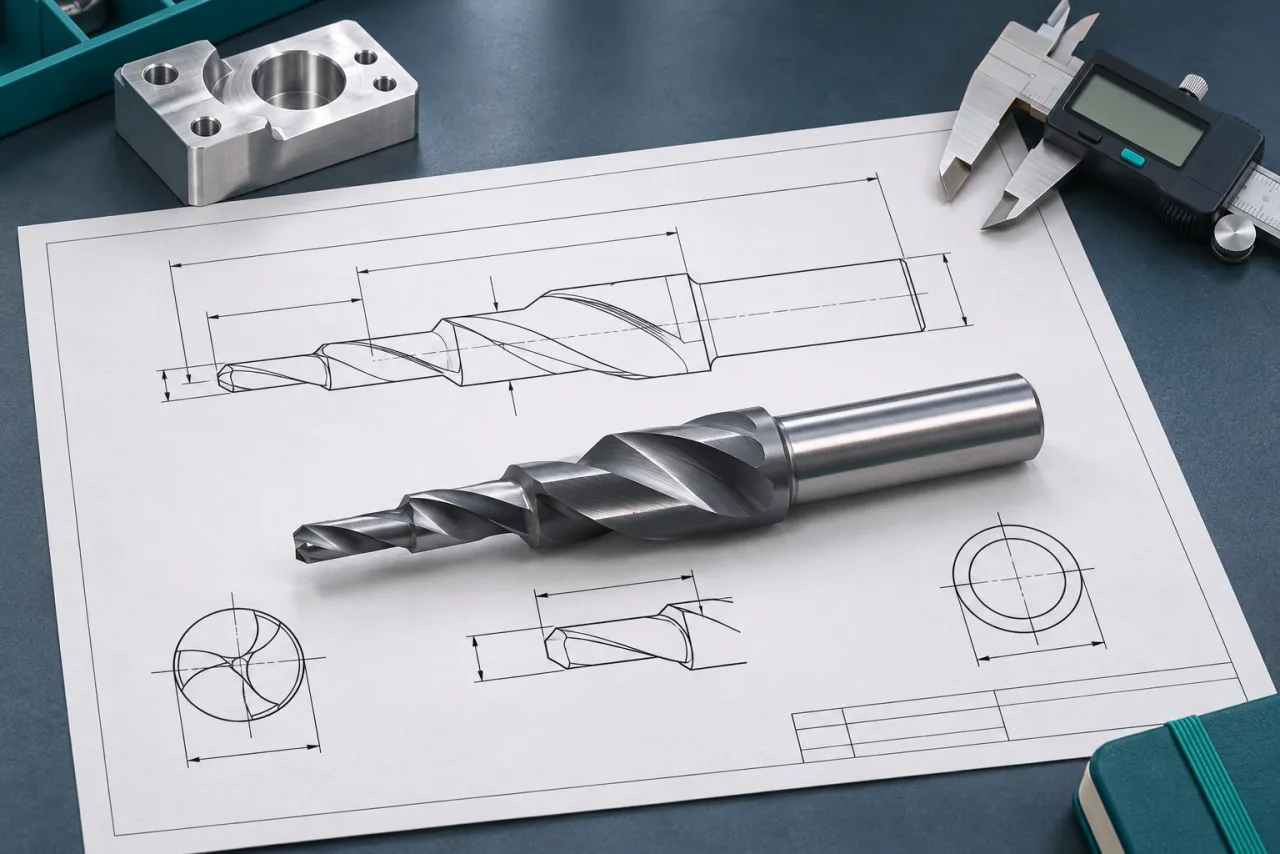
PCD micro drill bits can be reviewed for selected composite and non-ferrous applications where hole quality and wear resistance are priorities. The tool is only one part of the solution. Drill point geometry, PCD grade, edge preparation, shank accuracy, backing support and the drilling cycle all need to match the stack-up and the machine.
Common causes of CFRP and aluminum hole defects
Delamination at the exit is often caused by insufficient support, excessive thrust or a drill point that does not separate the cutting action cleanly. Fiber breakout can appear when the tool edge is worn or when the feed is too high for the laminate orientation. In aluminum, built-up edge can reduce the effective diameter and smear the hole wall. Hole-size drift may come from runout, a bent tool, thermal growth or an inconsistent clamping condition.
Record the defect by location. Entry-only damage points to one set of causes, while exit-only breakout suggests support and thrust should be investigated. If the hole quality changes as the batch progresses, compare the first and last holes under the same inspection method. That comparison helps identify wear rather than a fixture or program error.
Do not evaluate a micro drill only by the first few holes. A short trial can look successful even when the edge is gradually losing sharpness. Define an inspection interval and keep representative samples from the beginning, middle and end of the run. This creates a useful basis for selecting the tool material and for setting a realistic replacement or regrinding plan.
When PCD micro drill bits are worth reviewing
PCD can be considered for abrasive non-ferrous materials and composite stacks, including CFRP, GFRP and high-silicon aluminum. A PCD micro drill may be useful when a sharp, wear-resistant edge is needed for a repeat hole pattern, but the final selection depends on the hole diameter, depth, laminate thickness, fiber direction, aluminum grade and required tolerance.
For very small diameters, the shank and holder are as important as the cutting tip. A high-precision shank reduces the risk that runout will consume the available diameter tolerance. If the assembly contains an aluminum face sheet over CFRP, the point and flute design must manage two different cutting behaviors without packing chips in the transition zone.
Process checklist for stable small-hole drilling
- Describe the complete stack. List each layer, thickness, adhesive or gap, fiber orientation and backing condition.
- Measure tool runout at the cutting zone. Collet condition and holder cleanliness can be decisive at micro diameters.
- Support the exit. A sacrificial backup or a well-designed fixture can reduce breakout when the drill exits the laminate.
- Use a chip-clearing strategy. Pecking, air blast or another suitable cycle should be chosen around the hole depth and chip form. Avoid recutting packed chips.
- Inspect both diameter and edge quality. Use a gauge or microscope method that distinguishes oversize holes from fiber breakout and burr height.
Choosing geometry and supply details
A useful RFQ should include nominal diameter, tolerance, hole depth, point style if known, overall length, shank diameter, flute length, stack-up, machine spindle and quantity. A part drawing or hole-quality photo helps clarify whether the priority is diameter control, delamination reduction, burr control or tool life. MicroDrillTools can review standard and custom PCD drill geometries, and can also compare a PCD option with a solid-carbide micro drill where the application requires a different balance of cost and performance.
For production planning, define the sample quantity, inspection records, packaging and requested delivery window early. Small tools are easier to manage when the drawing revision, sample approval and batch release criteria are agreed before production starts.
If the part is assembled after drilling, include the downstream requirement in the review. A hole that accepts a fastener may still fail if the exit fibers interfere with a countersink, seal or insert. Sharing the assembly tolerance and inspection method helps the tool designer prioritize the edge condition that matters to the finished component.
MicroDrillTools solution options
MicroDrillTools supplies PCD tools for aluminum, copper, graphite and composite machining, with geometry reviewed around the workpiece rather than selected from a generic diameter list. The team can discuss PCD form cutters, end mills, drilling tools and custom series, together with solid-carbide alternatives for suitable operations. OEM and ODM inquiries are welcome for prototypes, small batches and repeat production.
FAQ
Can PCD micro drill bits be used on CFRP?
They can be reviewed for suitable CFRP and mixed-material stacks. The laminate, hole size, depth, support and required edge quality must be confirmed before choosing the geometry.
How do I reduce delamination at the hole exit?
Review backup support, thrust, feed, point geometry and tool condition together. A PCD drill may help with edge wear, but it does not replace proper fixture and cycle control.
What information should I include in a PCD drill inquiry?
Send the complete stack-up, hole diameter and tolerance, depth, drawing, machine and holder details, quantity, current defect and delivery target.
Can MicroDrillTools make a custom PCD micro drill?
Yes. Made-to-drawing PCD drills can be reviewed for special diameters, flute lengths, shanks and edge preparation.
Request a custom PCD drill review. Upload the hole drawing for a quote and include the laminate or stack-up, hole diameter and tolerance, and exit quality target. MicroDrill reviews the requested geometry before confirming availability.