
TECHNICAL INSIGHTS · November 1, 2026
High-Silicon Aluminum Machining: Choosing PCD, MCD and CVD Tools for Finish
How to control silicon abrasion, built-up edge, burrs and thin-wall deformation when machining high-silicon aluminum and reflective non-ferrous parts.
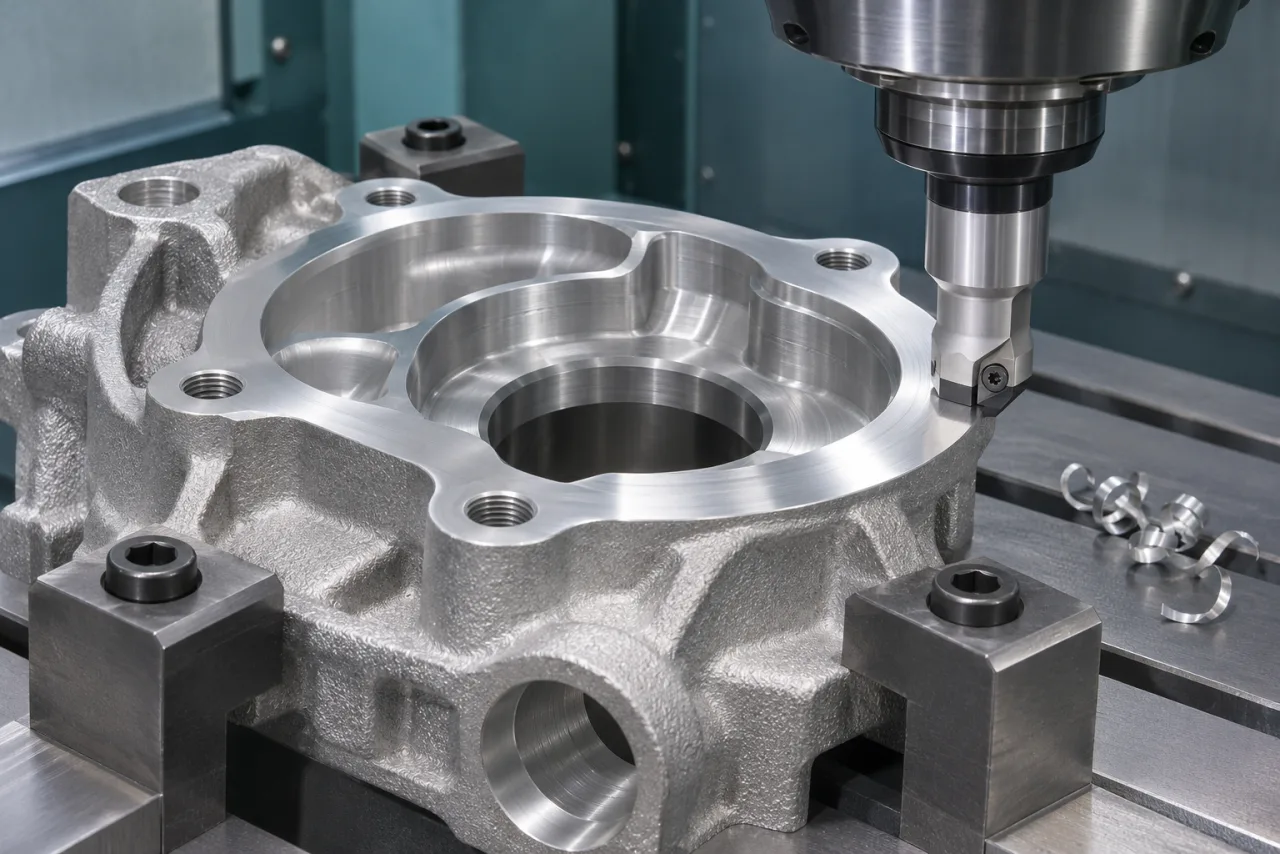
High-silicon aluminum is attractive for lightweight housings, automotive parts, electronics frames and thermal components, but it is not a simple version of 6061 or 7075. Silicon particles increase abrasion, while the aluminum matrix can still adhere to a hot cutting edge. A tool can therefore suffer from both wear and built-up edge in the same operation.
The right question is not “PCD or MCD?” in isolation. The useful question is which edge, geometry and process window can hold the required finish, burr level and dimensional tolerance for the actual alloy and feature. MicroDrillTools reviews PCD cutters, MCD/CVD high-gloss tools and solid carbide alternatives around that production requirement.
Typical failure modes in high-silicon aluminum
Abrasive wear from silicon particles
Free silicon can wear a conventional carbide edge rapidly, especially during long pockets, roughing passes or repeated die-cast parts. The edge rounds, cutting force rises and the part begins to show dimensional drift. Tool changes that are made only after a visible failure often create inconsistent batches.
Built-up edge and surface smearing
Aluminum can weld to an edge when heat, feed and chip evacuation are not balanced. Built-up edge can produce scratches, burrs and a cloudy or uneven appearance on reflective surfaces. A sharp, polished geometry and a stable cutting zone are usually more important than simply increasing hardness.
Thin-wall deformation and rework
Housings and cold-plate components may have thin walls, deep channels or sealing faces that cannot tolerate excessive radial force. Tool reach, workholding, stock allowance and finishing strategy need to be considered together. A cutter that is adequate for a solid block may be unsuitable for a flexible wall.
How to compare PCD and MCD/CVD tools
PCD is commonly considered where abrasive removal, edge stability and consistent non-ferrous cutting are important. MCD or CVD diamond options may be reviewed for fine contouring, mirror finishing and high-appearance surfaces when the alloy and operation are compatible. The distinction is not a promise that one material is always better; it is a way to match the diamond edge, substrate and geometry to the operation.
Solid carbide remains useful for complex forms, smaller batch sizes and applications where a flexible geometry or economical prototype is needed. Comparing cost per part should include tool changes, rework, inspection time and machine availability. The cheapest individual cutter is not always the lowest-cost process.
A practical selection method
- Identify the alloy. Provide the grade, silicon range, temper, casting condition and any surface treatment. “Aluminum” is not enough information for a responsible recommendation.
- Define the operation. Separate roughing, semi-finishing, finishing, drilling, slotting and form cutting. Include stock allowance, feature size, corner radius and reach.
- Set the finish target. State roughness, visual appearance, burr limit, flatness and dimensional tolerance. A mirror surface and a fast roughing pass need different priorities.
- Control the system. Check spindle and holder runout, coolant or MQL, chip evacuation, workholding and the path near thin walls or sealing faces.
- Validate cost per part. Record finish, dimensions, burrs, tool wear, changeover time and rework during a controlled sample run.
Where customization helps
A custom PCD or MCD/CVD tool may be useful when the standard catalog cannot provide the required nose radius, flute length, shank, relief, form or reach. MicroDrillTools can review a part drawing, existing cutter or marked-up sample and align the tool specification with inspection points. Prototype and small-batch approval allow the customer to confirm the edge and process before repeat OEM/ODM supply.
Expected result
A good high-silicon aluminum solution should stabilize finish and dimensions while reducing avoidable burrs, edge discoloration, tool changes and rework. The result must be measured on the actual alloy and machine. A generic performance claim cannot replace a controlled trial.
FAQ
Is PCD always suitable for high-silicon aluminum?
PCD is often reviewed for abrasive aluminum, but geometry, silicon content, operation and finish target still determine suitability.
When should I consider MCD or CVD?
These options may be reviewed for fine finishing, reflective surfaces and non-ferrous contours where edge form and finish are critical. Share the alloy and drawing first.
How do I reduce built-up edge?
Keep the edge sharp, avoid rubbing, improve chip evacuation and control heat. Holder runout and finishing allowance should be checked with the tool.
Need help choosing a diamond cutter for high-silicon aluminum? Send the alloy, feature drawing, finish target and current failure through our inquiry form.
Finishing strategy for reflective parts
Reflective aluminum surfaces make small tool marks easy to see. Keep the finishing allowance consistent, remove vibration sources and avoid asking a roughing cutter to create the final appearance. For optical, electronics or liquid-cooling parts, inspect the surface together with burr height and flatness because a visually bright surface can still fail a sealing or dimensional requirement.
When a customer changes from one alloy or casting source to another, repeat the material review. Silicon distribution, hardness and stock allowance can change the cutting load even when the part number is unchanged. A short controlled trial is usually less expensive than assuming the previous tool will behave identically.
Information for a useful quotation
Include the exact alloy, casting or wrought condition, feature drawing, stock allowance, target finish, machine, holder, coolant approach, quantity and current failure photos. If the tool is replacing an existing design, add its dimensions and the reason it is being changed.
For distributor or OEM programs, keep the approved alloy, drawing revision and cutter specification together. This makes it easier to repeat a validated result when the same part is ordered again or transferred to another machine.