
SOLID CARBIDE TOOLING · October 30, 2026
Carbide Drill Bits for Aluminum and Copper: Chip Evacuation Guide
How to select carbide drill bits for aluminum and copper by alloy, point geometry, flute design, runout, coolant and cost per part.
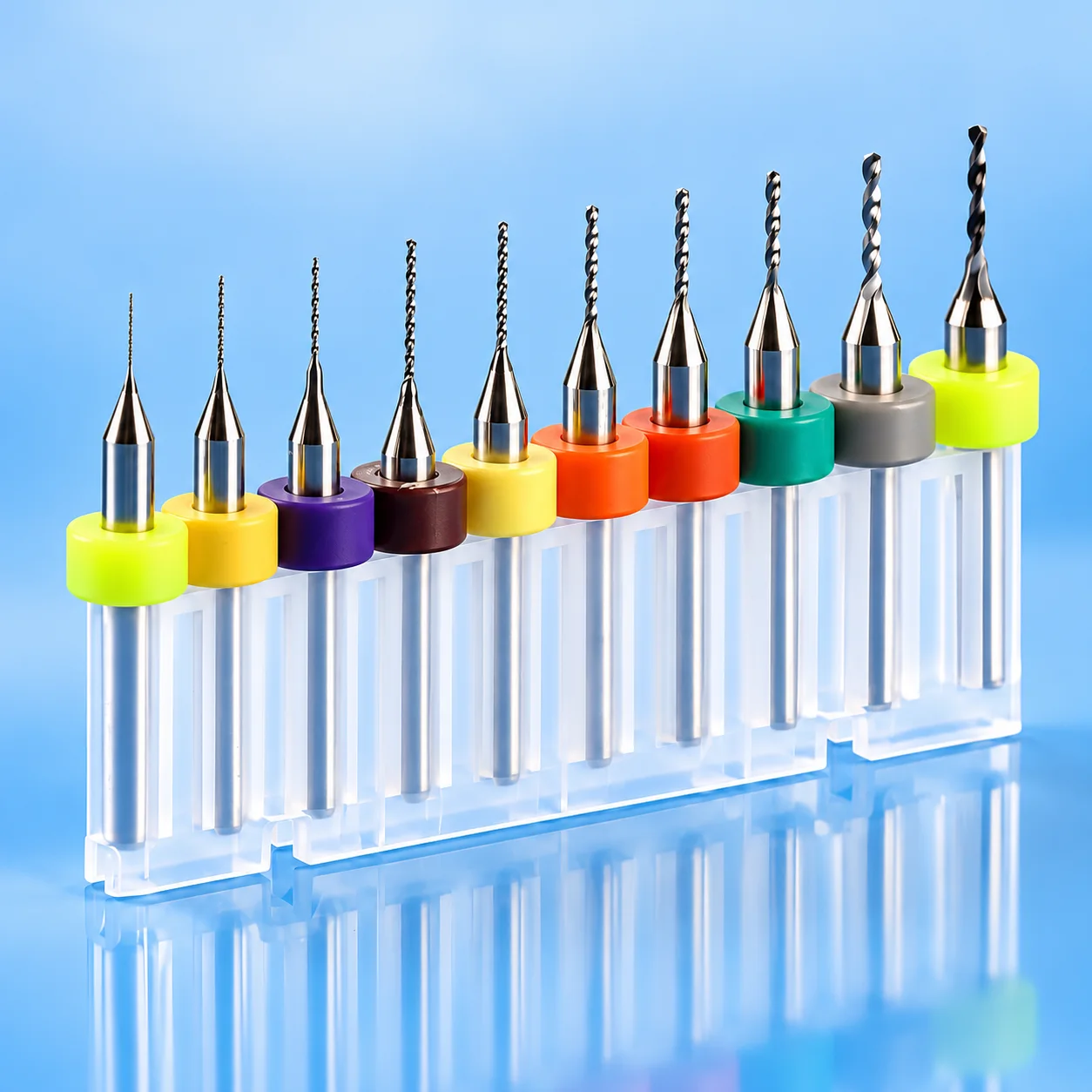
Carbide drill bits for aluminum and copper are often selected from a general-purpose catalog, but the correct result depends on chip evacuation, edge preparation, runout and the actual alloy. High-silicon aluminum can be abrasive, soft aluminum can create built-up edge, and copper can smear when the edge and cutting conditions are not matched.
This article provides a practical selection guide for CNC engineers and buyers who need stable holes, clean entry and predictable tool life in non-ferrous parts.
Identify the machining problem first
Start with the failure mode rather than the tool label. Are holes oversized after a short run? Is there a burr at the exit? Does the drill pack chips in a deep hole? Is the surface around the hole discolored or smeared? Each symptom points to a different combination of geometry, cooling, feed and support.
Include the exact alloy whenever possible. A high-silicon casting, a 6061-type alloy and oxygen-free copper do not create the same cutting load. Also note the hole depth, tolerance, entry shape, cross holes and whether the hole is drilled before or after another finishing operation.
Geometry for aluminum and copper drilling
Point angle and centering
The point should center reliably without creating unnecessary thrust. A geometry that is too blunt may rub and raise cutting temperature; an aggressive point may be sensitive to interrupted entry or a thin wall. For a production hole, evaluate the entry mark, chip shape and hole cylindricity—not just whether the drill passes through.
Flute polish and chip evacuation
Polished flutes can reduce adhesion in softer aluminum and copper, but flute volume must still be sufficient for the hole depth. In deep holes, peck or retract strategy may be more important than a coating. If chips are long and stringy, review the edge, coolant direction and feed before increasing spindle speed.
Edge preparation
A sharp edge can reduce cutting force and burrs in soft non-ferrous materials, while a small hone can improve edge strength in abrasive high-silicon aluminum. The edge preparation should be controlled; an oversized hone may increase thrust and leave a larger burr. Ask the supplier to state whether the edge is sharp, honed or chamfered.
Runout and machine setup
Runout is a frequent reason a good carbide drill bit performs poorly. Measure the tool in the actual holder, clean the collet and keep stick-out as short as the feature allows. If the hole tolerance is tight, ask for a runout value at the cutting section, not only at the shank.
Workholding also matters. A thin aluminum plate can vibrate even when the tool is correct. A stable backup or fixture, suitable coolant delivery and a controlled entry can improve the result more effectively than simply choosing a harder grade.
Coolant, chip shape and tool-life control
Coolant should reach the cutting edge and carry chips away from the hole. Flood coolant, through-tool coolant, minimum-quantity lubrication and air can each be appropriate depending on the machine and part. The important point is consistency: changing coolant delivery during a comparison can hide the effect of the drill geometry.
Inspect the tool at a defined interval. Look for built-up edge on aluminum and a polished or worn land on high-silicon alloys. Recording parts per edge and the reason for replacement gives procurement a better cost-per-part number than purchase price alone.
Keep the trial conditions simple enough to repeat: use the same holder, coolant delivery, workholding and material batch when comparing two carbide drill bits. If the hole size or burr changes, the recorded process data will show whether the difference comes from the geometry or from the machine setup.
This record also helps when ordering replacements. The supplier can see the alloy, hole depth, tool size, cutting condition and measured result instead of receiving only a request for a generic aluminum drill bit.
When to compare carbide with PCD
Solid carbide is a flexible starting point for many aluminum and copper operations, especially when hole size, quantity and machine conditions are moderate. PCD drill bits may be considered for abrasive alloys, high-volume production or applications where wear stability and hole quality justify a higher initial tool cost. The comparison should include parts per edge, scrap risk, cycle time and replacement lead time.
MicroDrillTools offers carbide micro drill bits and PCD drill bits and form tools. We can review the alloy, drawing, hole tolerance, machine and quantity before recommending standard or custom geometry.
Production validation checklist
- Measure installed runout with the tool in the production holder.
- Record the actual alloy and material batch.
- Check entry burr, exit burr, hole diameter and cylindricity.
- Inspect chips and flute condition after a controlled sample.
- Define a replacement point before hole quality drifts out of tolerance.
FAQ
Are coated carbide drill bits always better for aluminum?
No. Coating choice depends on the alloy, edge geometry and cutting condition. For some soft non-ferrous materials, a polished uncoated or specialized surface may reduce adhesion more effectively.
How can I reduce burrs at the hole exit?
Review support, point geometry, feed near breakthrough and tool sharpness. A backup board or a controlled exit strategy can be as important as the drill bit itself.
When should I request a custom drill bit?
Request a custom design when the standard range cannot meet the diameter, reach, step, coolant passage, shank or profile required by the part.
Need stable holes in aluminum or copper? Share your alloy, drawing and hole target for a MicroDrillTools recommendation.