
GIA CÔNG ĐIỆN CỰC THAN CHÌ · November 20, 2026
Graphite Electrode End Mills: Reach, Corner Radius and Holder Clearance
Compare cutting diameter, usable reach, neck clearance and corner radius before buying a graphite EDM electrode cutter. Includes catalog dimensions and a drawing RFQ checklist.
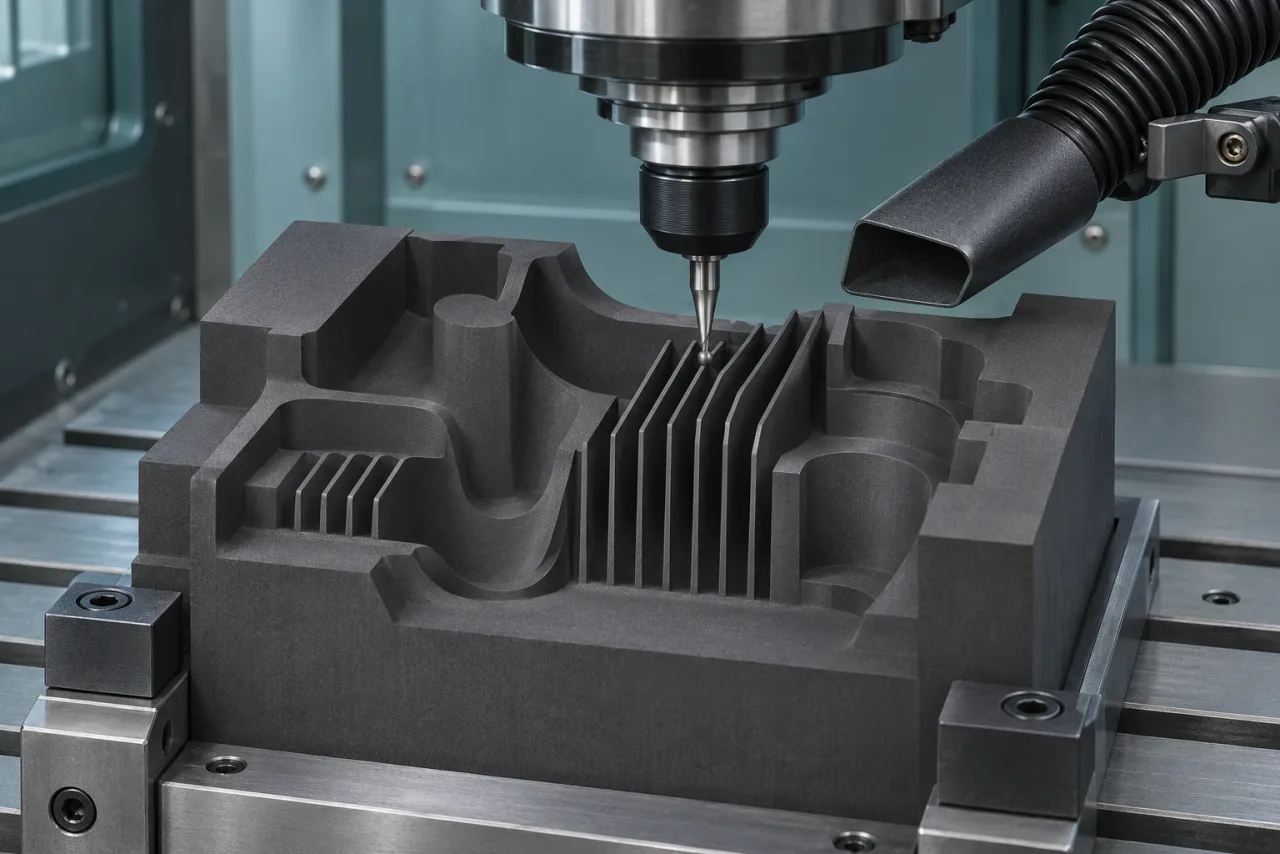
When buying an end mill for a graphite EDM electrode, compare the complete tool and holder envelope with the electrode section drawing. A small cutting diameter can fit the bottom corner while the neck, shoulder or holder still hits the pocket entrance. A replacement that matches only diameter and overall length can fail for the same reason.
Start with the electrode section, then compare the cutter drawing
| What to mark on the drawing | What to ask the tool supplier for | Why it matters |
|---|---|---|
| Narrowest opening and the deepest cutting position | Cutting diameter, relieved neck diameter and usable reach | The cutting edge may fit the pocket while the neck rubs its upper wall. |
| Depth over which the wall needs to be cut | Flute or cutting-edge length | A tool can reach the floor without having enough cutting length for a continuous wall pass. |
| Floor-to-wall fillet or formed radius | Corner or ball radius and the profile tolerance required for the feature | A larger edge radius can leave material where the electrode drawing requires a smaller fillet. |
| Holder nose position at deepest reach | Shank diameter, overall tool length and usable length at the planned clamping position | Overall length includes the portion inside the holder. It does not describe how far the assembly can reach. |
Use catalog dimensions for screening
MicroDrill’s graphite selection page lists PJM-PCD-16 with a 16 mm cutting diameter, a 16 mm shank and a 70 mm overall length. It also lists PRX-R5 with a 20 mm cutting diameter, a 16 mm shank and a 130 mm overall length. These are published envelope dimensions of two different PCD tools. Use them to identify a candidate family, then check the tool profile, graphite grade, wall clearance and the actual holder assembly before specifying either tool. The 130 mm in the PRX listing is an overall length. Ask for a drawing with the effective reachable length if the depth determines whether the tool fits.
When a small rib or pocket needs a different envelope, compare a long-neck diamond-coated end mill where the workpiece grade and machine process support it. OSG’s electrode tooling guidance and UNION TOOL’s range both show graphite-oriented cutter types. A long-neck ball tool, a corner-radius cutter and a PCD form cutter create different surfaces, even when their nominal diameters are similar. Compare their profiles against the same electrode section.
Specify the trial with the RFQ
Quote the graphite grade, electrode revision, batch quantity and which operation the cutter will perform. Include the holder or collet, allowed tool stick-out, spindle and extraction arrangement, and your inspection method. Identify whether a trial is for roughing, detail finishing or a form that must be reproduced in one pass. If the drawing is for the finished EDM cavity, provide the electrode drawing or state the spark-gap allowance separately so both parties quote against the same geometry.
For a replacement, include the current cutter code or drawing and describe the measured limitation. A picture of a chipped corner is useful, but the tool supplier also needs the size of the failed feature and when it failed. For an initial comparison, agree on the dimensions and edge quality to measure on the first electrode and after a defined run. Keep the graphite grade, workholding and inspection method consistent across trials.
Can a longer cutter replace a shorter one?
Confirm clearance at the deepest engagement, the flute length and the allowed gauge length before replacing it. Additional overhang can reduce rigidity. Compare the actual assembly in the CAM tool model and use the shortest reach that clears the drawing and fixture.
When should I ask for a made-to-drawing cutter?
Request a drawing review when a catalog tool cannot provide the corner form, usable reach or neck clearance your electrode needs. Review the sample, drawing and inspection method before committing to a production quantity.
Compare MicroDrill’s graphite electrode tool dimensions or send an electrode section drawing for a quote. For the broader process, see our graphite machining guide on dust, wear and edge detail.